Sunday, November 4, 2018

the raspberry finches are here

•


I had been alerted! 

First, a text from fellow naturalist Nick Stahlman about purple finches at his feeder on the east side of town. And then an email from Tiffiny Hamlin with photos taken by her husband Warren on the west side.

And then this morning a purple finch showed up at my southside location. Could it be?

Often confused with house finches that are common and here year-round, purple finches are only here some winters and in much smaller numbers. In winter plumage, both species are duller in color than in spring breeding plumage. 


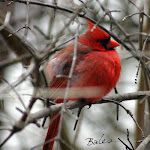
How do you tell them apart? One key is the shade of red. A male house finch is cherry red and the color is frontal as if a cherry pie blew up in his face. A purple finch is not Minnesota Viking purple. A better name would have been raspberry finch. And the color appears all over the top half of the body as if you had dunked the bird in a jar of Smucker's Red Raspberry Preserves. And with a name like Smucker's, it has to be good. Also look at Warren's photos and compare the purple finch's red to the cardinal's cherry red.

Also look at the streaks down the flanks under the folded wings. For a house finch these are brown, for the purple finch they are raspberry.

How do you attract them? Warren's photos hold the key. Several types of feeders offering several types of food. In winter, birds like the safety of being with other birds. So a migrant purple finch would see the activity from a distance and feel comfortable enough to fly in to eat. We always stop at the diner with the most cars parked in front. 

Why safety in numbers? Look at the photos again. There is always at least one bird on guard, watching for trouble.

To make your yard more bird-friendly, visit Wild Birds Unlimited, 7240 Kingston Pike, and they can help. 


•


Wednesday, October 31, 2018

goodbye chlorophyll

•


In spring and summer, leaves are green because of the pigment chlorophyll, but it doesn’t last. C
hlorophyll also absorbs light energy from the sun and through a magical process called photosynthesis converts it to stored chemical energy.  

In deciduous trees it is seasonal, mirroring the major league baseball season. The green of chlorophyll also masks the orange and yellow pigments, carotenes and xanthophyll, that lie underneath in each leaf all along. 

Carotene is an orange-to-red pigment and xanthophyll is a yellow-to-brown pigment that occurs widely in nature. Carotene is also what gives carrots their color while beta-carotene gives many plants their health benefits.

Here in the temperate zone it's more efficient for broad-leafed trees to shut down photosynthesis in the winter to avoid freezing and moisture loss through the leaves. As October flows into November, chlorophyll breaks down revealing the brighter pigments beneath. That’s what we see in the leaves as they reach senescence and fall from the trees.

•

Tuesday, October 23, 2018

big day at Wild Birds

•


Wild Birds Unlimited would like to thank everyone who stopped by last Saturday to learn about the species of birds that only spend their winters here in the Tennessee Valley.

Species that will be showing up soon like winter wren, hermit thrush, yellow-bellied sapsucker, golden-crowned kinglet, dark-eyed junco, white-throated sparrow and red-breasted nuthatch. The group also learned about the different things you can do to attract these shy birds to your backyard: heated birdbath and Bark Butter are at the top of that “let’s get ready for winter” list.

Wild Birds is one of the sponsors of the Hummingbird Festival at Ijams Nature Center every August.

And as if on cue, a red-breasted nuthatch showed up at the home feeders of Wild Birds Assistant Manager Tiffiny Hamlin the very next day. Plus what appears to be a late-season migrant, a young Cape May Warbler in winter plumage.

What a day, Tiffiny! A backyard two-fer!

Ijams thanks Liz & Tony Cutrone for inviting us. 


•

Monday, October 22, 2018

one tough towhee

• 


There it lay. In the road, flailing about. 

I slowed to look, stopped and got out of the car to see what was going on. An adult male eastern towhee had been hit and lay there panting. Birds pant when they are hurt or stressed or scared.

Picking it up, I soon realized this was not its first brush with trouble. The towhee was missing his left foot. An old wound, the leg had healed. But now it had a new trauma. 

Sitting him on the passenger seat I drove home hoping to assess the damage. Still its mouth was agape. Still it panted, looking around.  I spoke to it softly. 

“That a boy. You’ll be OK.” 

What was he thinking as he surveyed the inside of my car?

“Is this guy Charon? Ferrying me across the River Styx?” 

Do birds think such thoughts? Does Charon drive a Ford?

Parking in my driveway, I opened my door and reached for the towhee. But he would have none of that. The towhee had returned to his senses. He started flying around the inside of my car, finally landing in my lap. Then hopped to the floorboard between my legs and swish, he was out my open door. 

Now. I am looking out for a one-footed male towhee. I hope he likes his new home. 


• 

Thursday, October 18, 2018

shower mate

•


Generally, I expect to take my morning shower alone...well, who are we kidding? I always expect to take my morning shower alone. 

Yet, this morning after I stepped in and began to adjust the shower head I noticed I was indeed not alone. First glance, with water streaming down my face, I thought it was some sort of pale green moth. But as I reached for it, it hopped away. Moths don't hope, they fly.

Therefore, this morning I took my shower with a Cope's gray tree frog (Hyla chrysoscelis) named in 1880 by its discoverer Edward Drinker Cope. 
And this year's model did not seem the least bit interested in me but I suspect it enjoyed the misty shower environment. 

But, oh, did I marvel at it. First thing you will notice is that this gray tree frog is not gray. But they can modify their colors a bit to better blend into their surroundings and luckily my bathroom is painted a pleasing shade of fern green, a hue my bathing buddy seemed to like.

After our shower ended, I caught Copey to move her outside where she belonged.

Best guess. Copey found her way inside recently through an open bedroom window. It was storming that night and I wanted to hear and smell the rain.


•

Wednesday, October 17, 2018

Natural Histories: osage orange

•


This time of the year, the hedge apples are falling. 

UT Press writes, Natural Histories "illuminates in surprising ways the complicated and often vexed relationships between humans and their neighbors in the natural world."

Perhaps the most vexing encounter in the book between humans and the natural world occurred when the boys in gray engaged a simple hedge planted due west of the Harpeth River n Middle Tennessee.

On November 30, 1864—153 years ago this month—the horrific Battle of Franklin was fought south of Nashville. An osage orange hedge row played a key role in the outcome stopping one division of the advancing Southern army "dead" in their tracks. When the smoke cleared, the Confederate Army of Tennessee had lost almost 7,000 men in just five hours. (The Union army's dead and wounded numbered significantly less: only 2,326.) Here's a snippet from my book:

"The almost forgotten Battle of Franklin was a death knell. “This is where the Old South died,” says activist Robert Hicks, “and we were reborn as a nation.”

I visited the site on this date in 2004. It was a rainy day much like today. Here's another passage from the book:

"Leaving Lewisburg Pike, I walked along the rain soaked streets and soon found the two aged osage orange trees still growing in the vicinity of the railroad line. Historian Cartwright had told me about the old trees just an hour before. Both were perhaps descendants of the hedgerow that stopped Loring and, as such, were living monuments. It was a circuitous chain of events that moved osage orange from its native Red River home to this historic point of all out chaos; turn back the clock and replay the era, day by day, and it would not have unfolded in exactly the same way. I paused just long enough to admire the towering presence of the elderly trees; and as the rain began to fall heavy once again, I zipped up my coat, turned and walked away."

Excerpts from my book Natural Histories published by the University of Tennessee Press.


The fruit of an osage orange looks like a green brain
and probably tastes like one too,
although, I must admit, I've sampled neither.

•

Monday, October 15, 2018

thank you, villagers

•

Many thanks to Claire Manzo president of the Tellico Village Birders Club for inviting me to speak to their group recently about some of the species of birds that migrate south or downslope from the Smokies to spend their winters here in the Tennessee Valley.

We all look forward to seeing species like the winter wren, hermit thrush, golden-crowed kinglet and dark-eyed junco. The Tellico Villagers routinely have common loons and brown-headed nuthatches, which was a bit of a surprise to me. 

After the rains pass, it will be a beautiful time to go birding. 


•

Friday, October 12, 2018

Monarch Days 2

•


Not a huge fan of multitasking, living in a digital world with a 1970s 8-track brain and all. One track at a time is my modus operandi. 

But sometimes the need arises. Working on the manuscript for my fourth book for the University of Tennessee Press AND monarch butterfly chrysalis-watching for Jen, Wayne and Sara Cate Roder who are out of town.

Call me an adoptive papa.  

Luckily, the new born emerging on my desk while I was writing. A lovely female and after six hours of wing-drying, ZEE540 was released before the rains sweep through. Good thing, she's flying to Mexico.

Thank you, Clare for showing me the way. 


•

Thursday, October 11, 2018

Queen of the Night

•


Call it a big night. 

Monarch butterfly chrysalises ready to emerge on the north side of the house and Grandma Pearl's Night-Blooming Cereus, a plant also known as the Queen of the Night (Epiphyllum oxypetalum), produced a double bloom on the south side of the house. 


Two ephemeral moments, so who could sleep?


The Queen is native to Southern Mexico and into South America. Mine is a plant that grew from cuttings from my Grandmother Pearl's plant, she had a fondness for unusual house plants. The cereus is a ceroid cacti that only blooms rarely. Each blossom is also only open a few hours one night and then it wilts. Either you are there to witness it, or you are not.  

Obviously, I parked myself in front of it with thoughts of my grandmother. 


•

Wednesday, October 10, 2018

Monarch Days

•


Yesterday, another big monarch butterfly day. Two more emerged from their chrysalises, both males.

Numbers XYM152 and XYM153 were tagged and sent on their way to the mountaintops of Mexico.

Godspeed, John Glenn.


•  

Sunday, October 7, 2018

migrating monarch season


•


Been busy of late. It's migrating monarch butterfly season.

Under the tutelage of naturalist, monarch maven and friend Clare Dattilo and her three children, I have taken up the cause. I have been hand-raising monarch butterfly caterpillars and watching over mine and other's chrysalises. When the adult butterflies emerge. I tag them with a number and let them fly away. This time of the year, they migrate to Mexico. Oh yes! 


In my third book, Ephemeral by Nature, I tell their complete story and how, beginning in the 1930s, a husband and wife team, Frederick & Norah Urquhart dedicated 40-years of their lives, piecing together their migration story.

Why do you hand-raise monarchs? Their population is in decline and they need help and to protect them from the hazards of being a caterpillar that include parasitoids insects—12 species of tachinid flies and at least one braconid wasp—that seek them out to lay eggs inside them that results in the death of the late-instar larvae or pupae. And it is not a pretty way to die.

And it is all so fascinating to watch the entire process of metamorphosis. 


Thank you, Clare!

For more photos go to: ephemeral monarchs.


Adult monarch tagged with the number ZEE530 about to fly for the first time over the meadows at Cherokee Farm and begin her trip to Mexico. 

•

Wednesday, September 26, 2018

thank you Wild Birds

•


Spitfire, an injured American kestrel, would like to thank owners Liz & Tony Cutrone and Assistant Manager Tiffiny Hamlin of Wild Birds Unlimited for inviting her into their store. 

Spitfire represented Ijams Nature Center and was there for a talk about how to identify local birds of prey. Birds like hawks, owls, vultures, eagles and falcons like her.

Spitfire has a very injured left wing. She can no longer fly but is well cared for by the folks at the nature center.

Wild Birds Unlimited, located at 7240 Kingston Pike, has everything you need to attract birds to your backyard and with the cold weather months rapidly approaching it is time to clean or replace old feeders and stock up on all of the other items you need to turn your backyard hobby into a passion.

Wild Birds Unlimited is a regular sponsor of the Hummingbird Festival held at Ijams every August.

Spitfire and Ijams thanks them all.


•


Monday, September 17, 2018

thank you, Seniors for Creative Learning

•


A warm thank you to the Seniors for Creative Learning for inviting me to speak at the John T. O'Connor Center in East Knoxville.


Our topic? Ephemerality in nature with examples from all three of my UT Press books: from freshwater jellyfish to 17-year cicadas to endangered/extinct species. 

"What is your life? For you are a mist that appears for a little time and then vanishes away," James 4.14. 

Be mindful. Every day is precious, enjoy each ephemeral moment!


•

Monday, September 10, 2018

a walk back in time

•


Last Saturday, the 2018 class of TN Naturalist@Ijams took a walk with me back in time. We passed over the four layers of bedrock or formations that underlie the nature center. Starting with the Ottosee shale under the Visitor Center, we then moved on to Chapman Ridge sandstone, Holston crystalline limestone (the rock that was quarried and sold as Tennessee Marble) and finally brushed past the Lenoir formation of silty, crumbly limestone.

These four layers were deposited—one on top of the other—during the Ordovician geologic period between 443.8 and 485.4 million years ago. That's deep time. And our tour ended up deep in the ground at the Keyhole and Rock Bridge. The first of three pits found in the now abandoned Ross Marble quarry site.


Thanks to all who braved the awful heat.

Anytime I walk back in time at the nature center, I tip my hat to retired geologist and fellow UT Press author Harry Moore who was the first to lead me on such a journey.


•

Tuesday, September 4, 2018

thank you, WBIR


•


A gracious Ijams' thank you to WBIR's Leslie Ackerson and Katie Inman who visited with me very very early (5 a.m. is early) this morning to meet on live TV some of the injured or disabled animals that we care for daily.


What was the occasion? September 4 is National Wildlife Day, an annual opportunity to learn more about endangered species, preservation and conservation efforts around the world. Zoos, aviaries, marine sanctuaries and nature centers like Ijams provide a variety of ways to get to know local wildlife.

Either feathered, furry, scaly or shelled our adopted menagerie of animals is used by the education department to raise awareness of local wildlife and their issues.

Thank you, Leslie and Katie and our friends at WBIR.


(Both Leslie and Katie revealed that they had first visited Ijams on field trips when they were little girls which made me feel older than mud. Shhh! Our secret.)


•

Monday, September 3, 2018

thank you, ORICL

•


A warm thank you to Jim Rushton, Katherine Smith, Priscilla McKenney and the other members of the board of ORICL: Oak Ridge Institute of Continued Learning, for inviting me to be the featured speaker at their Community Lecture Series recently. We met at Roane State Community College on the Oak Ridge Campus.

My lecture was entitled Ephemerality: The shortness of life and I pulled examples from all three of my books published by the University of Tennessee Press: Natural Histories, Ghost Birds and Ephemeral by Nature, to illustrate my topic. 

And I was also able to take a jar of live freshwater jellyfish to symbolize the very nature of ephemerality. 

Thank you to all who attended.


•