Sunday, January 20, 2013

Audubon's Pileateds

my favorite Audubon's:

Pileated woodpecker

"It would be difficult for me to say in what part of our extensive country I have not met with this hardy inhabitant of the forest. Even now, when several species of our birds are becoming rare, destroyed as they are, either to gratify the palate of the epicure, or to adorn the cabinet of the naturalist, the Pileated Woodpecker is every where to be found in the wild woods, although scarce and shy in the peopled districts."

"Wherever it occurs it is a permanent resident, and, like its relative the Ivory-billed Woodpecker, it remains pretty constantly in the place which it has chosen after leaving its parents. It is at all times a shy bird, so that one can seldom approach it, unless under cover of a tree, or when he happens accidentally to surprise it while engaged in its daily avocations," writes John James Audubon, the naturalist, in his 
Ornithological Biography.

Why is Audubon relevant? Because in addition to his artistic talent, perseverance and derring-do, he was a d--- good naturalist. A lot of what we know today about birds, the audacious, often farouche, John James Audubon was the first to put in print.

Thursday, January 17, 2013

in decline: grosbeaks


And speaking of bird species in decline. Nature is always in a state of flux.

There was a time in the 1980s, when flocks of evening grosbeaks would spend their winters in the Tennessee Valley and foothills of the Great Smokies near my boyhood home in Gatlinburg. But, not any longer. Nope.

In 2007, the Audubon Society reported that their population had declined 78 percent in the past 40 years. Yet, this is not the first significant change in their numbers as the Audubon article penned by Greg Butcher continued, "The evening grosbeak teaches us how bird populations can change dramatically. Virtually unknown east of the Mississippi River until 1850, it expanded east—peaking in the mid-1980s—then plummeted. It's future will depend on maintaining healthy habitat in the boreal forest."

Historically, the eastern spread of the large, chunky yellow finches is possibly due to plantings of Manitoba maples and other trees and shrubs around farms and the availability of bird feeders in winter.

Their decline? In part, it is believed that the "chemical control of spruce budworm and other tree pests reduces this species' food supply and may cause secondary poisoning." 

Here one day, gone the next, such is the case with us all.

- Photo by Simon Pierre Barrette

Wednesday, January 16, 2013

in decline: grackles


At the local CBC ten days ago, Shearwater and I watched as a flock of 30 or so common grackles flew into a tree off Ginn Road. We estimated their number and marked them on our tally sheet.

Yesterday, I was surprised to be reminded that the shiny, iridescent black birds with intense yellow eyes log in at number 14 on the list of Audubon's 20 common species in decline, having lost over 50 percent of their total population in the past forty years. This means that the gregarious common grackle may become the not-so-common grackle if this trend continues.

For other species on the list go to: In Decline.

- Photo by Howard B. Eskin

Monday, January 14, 2013

Audubon's Carolina Parakeet


my favorite Audubon's:

Carolina parrot, (today, Carolina parakeet)

If the whooping crane almost went extinct, this one surely did. The last documented Carolina parakeet died in the Cincinnati Zoo in 1918. But in Aududon's day they existed in great flocks. Sadly though they had a fondness for maintained orchards and their young fruits, he writes:

"Do not imagine, reader, that all these outrages are borne without severe retaliation on the part of the planters. So far from this, the Parrots are destroyed in great numbers, for whilst busily engaged in plucking off the fruits or tearing the grain from the stacks, the husbandman approaches them with perfect ease, and commits great slaughter among them. All the survivors rise, shriek, fly round about for a few minutes, and again alight on the very place of most imminent danger. The gun is kept at work; eight or ten, or even twenty, are killed at every discharge."

"The living birds, as if conscious of the death of their companions, sweep over their bodies, screaming as loud as ever, but still return to the stack to be shot at, until so few remain alive, that the farmer does not consider it worth his while to spend more of his ammunition. I have seen several hundreds destroyed in this manner in the course of a few hours, and have procured a basketful of these birds at a few shots, in order to make choice of good specimens for drawing the figures by which this species is represented in the plate now under your consideration," writes John James Audubon, the naturalist, in his  Ornithological Biography.

Why is Audubon relevant? Because in addition to his artistic talent, perseverance and derring-do, he was a d--- good naturalist. A lot of what we know today about birds, the audacious, often farouche, John James Audubon was the first to put in print.

I'll be making a presentation about Audubon's "Birds of America" this afternoon at 2:30 at Wilderness Wildlife Week in Pigeon Forge. Admission is free.

Saturday, January 12, 2013

Venable keynotes


Wilderness Wildlife Week begins today in Pigeon Forge. Eight days of outdoor and regional cultural presentations and outings.  


Tonight at 7:45 p.m., WWW presents keynote speaker Sam Venable. Noted as a local storyteller, humorist, author and long-time columnist for the Knoxville News-Sentinel, Sam's talk: How to Tawlk and Rite Good: An Introduction to the Native Tongue of Southern Appalachia will be in the Dobro/Harp Rooms.

On a personal note: Sam wrote the introduction to my first book: Natural Histories. He was the first to read the manuscript, albeit in rough form.

For more information about the event, go to: WWW

Thursday, January 10, 2013

fresh greens!


My ancestors lived in the foothills of the Great Smokies (Roaring Fork and Baskins Creek watersheds). Horace Kephart referred to them as highlanders, I prefer mountaineers, but most of the world simply called them hillbillies. 

In the fall, they canned, pickled, sulfured, salted, dried, buried and squirreled away every bit of food they possibly could. It was important because it would be all they had to eat for months. There wasn't a supermarket down the street; not that it mattered since they had little money. Needless to say, they had to be self-reliant. Times were hard but they were even harder.

During the long cold winter, all they ate came from their stored larder. You have to imagine, they longed for the taste of anything fresh. At this time of the year, their yearning was such that they bundled up and went exploring. They were looking for something vibrant and green. They were looking for watercress.

As the name implies, watercress grows in water. It prefers slow-moving shallow limestone-based streams—something we have a lot of here in the valley.

On a recent damp walk through a local wetland—muddy, muddy, muddy—down Toll Creek looking for signs of beaver, the bright green of watercress glistened like a verdant beacon, a most welcomed sight, a sign of the coming spring; for my mountaineer ancestors, it would have meant something fresh for the supper table.

Tuesday, January 8, 2013

Wilderness Wildlife Week


Cabin fever?

This year, Wilderness Wildlife Week in Pigeon Forge runs from January 12 through January 19. During that time, visitors choose from more than 100 presenters sharing their knowledge of the outdoors and Smokies' culture in more than 175 seminars, lectures and workshops. (Pack your lunch, Sunday, January 13 has 33 sessions alone.)

So much is crammed into the event’s eight-day run that it’s impossible to do it all. Perhaps this is what keeps people coming back year after year.

And even though it’s in January, all of the activities are not indoors. This year’s schedule offers many guided walks and hikes.

This will be the 23rd year of the event that has no equal in the country.

Below are a list of my talks, all programs are free:

Sun. Jan 13, 12:30 - 1:30 p.m. 
Chickadee: Bringer of Truth: 20 plants and animals important to the Native Americans of the Tennessee Valley.

Mon. Jan 14, 2:30 - 3:30 p.m. 
The making of John James Audubon's monumental Birds of America 

Tues. Jan 15, 3 - 4 p.m.
Identifying Local Birds of Prey 

Is that a hawk or a falcon, a golden or bald eagle? How many species of owl can be found in the Tennessee Valley? Join me for some quick tips on how to identify the local birds of prey.

Plus, attend the talk by my friend, Paul James.

Sun. Jan 13, 5 - 6 p.m.
Explorers of the Smokies in the 1920s. 
H.P. Ijams, Carlos Campbell, Dutch Roth, Paul Adams, Jim Thompson, Brockway Crouch and Camp Margaret Townsed, all had a role in the early days of the national park. Want to learn more?

All four programs are at the Music Road Hotel Convention Center in Pigeon Forge.

Don't forget to stop by the Ijams table in the Exhibit Hall. For a complete list of all programs go to: WWW.

- Photo of a red-tailed hawk


Sunday, January 6, 2013

what's in a name?


Just a moniker musing: not all red-tailed hawks have red tails, not all ruby-throated hummingbirds have ruby throats, not all bald eagles are bald or even white-headed, not all black-throated blue warblers have black throats and not all pied-billed grebes have pied bills. However, all three-toed woodpeckers DO have only three toes (on each foot), or at least I think so, I've never actually seen one and counted their digits. 

I do have it on good authority that sharp-shinned hawks do have sharp ridges that run the length of their leg bones.

These curiosities come to mind because yesterday, on the local Christmas Bird Count, Shearwater and I found six pied-billed grebes. None had noticeable spots on their bills because in their winter non-breeding plumage the spots are negligible, which reminded me of other birding caveats: immature red-tailed hawks have brown tails; female and juvenile ruby-throated hummingbirds have white throats; for the first two years, bald eagles have brown heads; and female black-throated blue warblers have olive throats.

To paraphrase the Bard: So what's in a name? That which we call a pied-bill by any other name would still be a pied to me.


Friday, January 4, 2013

a duck with teeth?


As flashy as a gadwall is plain, don't let the Hollywood looks and diminutive size fool you, hooded mergansers are intense. Essentially they are small ducks with teeth. Well, actually they have sawbills that allow them to catch their meals: fish, crustaceans and aquatic insects, which they find underwater by sight. They are great swimmers as Eliot and I observed the other day at Cove Lake.

These dynamos are fascinating to watch as they dive below the surface and disappear from sight, you never know where they'll pop up next. The one we watched made the gadwalls look sluggish and so duck-like. 


Wednesday, January 2, 2013

e-gad walls


Some bird names are simply fun to say. Grebe. Phalarope. Sora. 
Ouzel. Magpie. Gadwall.

The origin of the last one is obscure, coming into being when British ornithologist Francis Willughby named the duck in 1676. Where the name gadwall came from is a mystery. 

As a palate-cleanser after Christmas, my tradition for seeing out the old year and ushering in the new is doing something low-key and unhurried, preferring to slip not stumble into the change of calendar.

Even though it was cold, Eliot and I chose to go birding at Cove Lake. And the most interesting thing we found was a raft of perhaps 40 gadwalls, not a particularly easy bird to ID from a distance. Like mallards, they're dabblers perhaps best noted for their nondescriptness.

Plain is plain. Soft gray-brown overall, except the males have black rumps. That's the first clue. Also, their heads are not sleek like a mallard but oddly shaped. "Pouffy," said Eliot. 

The maraschino on the top of our gadwall sorbet was a lone male hooded merganser—as flashy as the rest were bland—swimming along with the group. While the rest merely dabbled, the merganser dove deep into the water showing off his adroitness at not being surface-bound.

"I've got no strings, So I have fun, I'm not tied up to anyone, They've got strings, But you can see, There are no strings on me," sang Pinocchio.

Sunday, December 30, 2012

dreaming of ibis


I don't know if this is on par with the Pam Ewing dream that Bobby was dead only to wake up and find him in her shower thus negating everything that happened in Season 8, but here it goes.

Last night I dreamed I was leading a bird walk down the Will Skelton Greenway at the nature center. We hadn't really found anything out of the ordinary until POP! (That's how things happen in dreams, things just pop up.) A white ibis materialized on a grassy hillside.

It appeared to be weak or sick, missing a lot of feathers, so I walked over, picked it up and carried it to UT Veterinary Hospital which was only a few yards away. (That's another thing that happens in dreams: space and time gets compressed to move along the narrative.)

There I learned that the ibis was 30-years-old, in failing health and that I would have to return it to sunny Florida myself. 

What this all means, I'll leave to the dreamologists but perhaps I need to go on a trip with an elderly bird.

I also can add white ibis to my list of birds that appear in my dreams, that's a lifer. 

Happy 2013. 

Friday, December 28, 2012

oh that rosy rump


After the merriment of Christmas: the nog, the peppermint bark, the Scut Farkus Affair, the Grinch, the Peanuts gang singing Hark! the Herald Angels, the audacious sweaters, the smell of evergreen in the house, the flicker of candles, the eight maids a milking, the Dasher, the Dancer, the Donner and Blitzen (or is it Dunder and Blixem?), the dizzying blur that is the first three weeks of December, you then look for the little things to get you through to the New Year and into the cold, gray of January. 

For me? Mine came to my feeder yesterday: a purple finch

I do not get one every winter; I get those ubiquitous house finches, the interlopers, the usurpers, the boorish Hollywood horde knocking at my chamber door. But this one was indeed different. The color softer, more raspberry, the streaks down its flanks were pinkish and the rump—Oh that rosy rump. It really doesn't take that much to ignite a smile, warm the cockles.

Yes, that's enough to chase away the post-Christmas letdown. Although, I do believe I have nog left in the frig. Must savor it though, it's darn hard to find in June.

And, once again, I did not get a leg lamp. What's a fellow have to do?

Wednesday, December 26, 2012

the rafter that got away


When I was a kid, telephones were heavy, came in one color (black) and were owned by Southern Bell Telephone and Telegraph Company, i.e. Ma Bell. And when they rang, the entire house shook like there was a three alarm fire. The clanging beast was mounted on the wall in the kitchen, so having a private conversation was close to impossible, besides Mom was always cooking collards or some such so it was no place to be. 

Our original phone number in Gatlinburg was 127. Easy to remember. Three digits. Area codes and zip codes and dress codes were still years in the future.

Flash forward. Today, cellular phones are small enough to fit in your pocket, you can buy them practically anywhere and some—believe it or not—actually double as cameras. (I'm not making this up, it's true.) I got one for Christmas and today managed to take my first photograph and e-mail it to myself.

It was a photo of a rafter (flock) of wild turkeys walking down a gravel road, very bucolic, very take-me-home-country-roads-ish, right out of Field & Stream, although you might note that by the time I figured out how to use my oh-so-smart camera, the gobbler hens had strolled away with a chuckle.

And yet, for this Luddite, methinks a modicum of modernization has occurred?


Saturday, December 22, 2012

is reality really real?


Is this downy woodpecker really real? 
Or the figment, as am I, of someone else's imagination?

OK. We survived that Mayan end-of-world thingy—unless their math was wrong and they were actually two days off—only to have our anxieties wake up to this new shocker. 

"What if everything — all of us, the world, the universe — was not real? What if everything we are, know and do was really just someone's computer simulation?" writes science writer Joel N. Shurkin. His recent article in "Inside Science News" reports on a new thread of research by professors at two universities searching for traces of the simulation in cosmic rays. (And/or mismatched birth marks on identical twins.)

If this is even remotely possible, even remotely, why wouldn't a futuristic simulator do a better job of imagining me? Was he/she/it having an off day?

For more of Shurkin's article go to: Is Reality Real?


Thursday, December 20, 2012

pale blue dot


Astronomer, professor, science author
 Carl Edward Sagan died on this date, 
20 December 1996.

When I was a kid,
seeing Sagan on the Tonight Show with Johnny Carson 
turned me on to the wonders of the cosmos:
all that is, ever was, and ever will be.

In 2007, I visited Sagan's grave on a hillside in Ithaca.

Six years before he died, 
 the Voyager 1 spacecraft
was on a journey that would take it 
out of our solar system.
At Sagan's suggestion
it looked back and took a photograph 
of lonely little Earth 
from 6 billion kilometers away. 
In the photograph, our home planet is so small (0.12 pixels) 
it appears as a barely detectable "pale blue dot."

Here's a remembrance.


Tuesday, December 18, 2012

FLC book talk tonight


In Search of the Ivory-billed Woodpecker


December 18, 6:30 p.m.
Location: Blount Memorial Wellness Center 

220 Associates Blvd. - Alcoa, TN


Stephen Lyn Bales, an Ijams senior naturalist and author, will speak about his latest book Ghost Birds: Jim Tanner and the Quest for the Ivory-billed Woodpecker, 1935-1941

It is the compelling story of Jim Tanner, the only ornithologist to conduct an in-depth study of the largest woodpecker to live in the United States, the legendary ghost bird of the South. Tanner’s fieldwork in the 1930s while a grad student at Cornell University provide a detailed look into the natural history of this species that may or may not be extinct.
 

Several copies of Ghost Birds have been donated by UT Press to Foothills Land Conservancy and they will be available for sale during the presentation with 100 percent of the proceeds going to FLC. They will make great holiday gifts!
 

Bales has a second book, called Natural Histories, and has also written for Smithsonian magazine and is a regular contributor to The Tennessee Conservationist magazine. Bales is also a regular speaker at Wilderness Wildlife Week and other venues.
 

For more info, please call Elise at (865) 681-8326.

• 

Sunday, December 16, 2012

a pine out of season


Pine Warbler (Setophaga pinus)

Pine warblers, as a rule—and such rules are often amended, bent or pushed over a cliff—spend their winters south of my location: Georgia and the Gulf Coast states. But that may be changing.

My friend, Rikki Hall, recently commented, "I hear pine warblers out of season with growing frequency. They spend a lot more time high in the canopy, so they are harder to notice, but with climate change I think yellow-rumps are losing their claim to being the only wood warbler that overwinters in our area."

So, I've been watching for pine warblers out of season.

I told birding protégé Eliot to pay attention to the pines that tower over their apartment and listen for something that sounds like a chipping sparrow—a rather robust trill with a hint of being forlorn.

Last week, she spotted and then heard one, her first. A lifer.

Canadian author, radio host and musician Alan Watt is credited with coining a popular phrase more than a decade ago to describe the social, economic and political changes in society. But it applies here as well. 

Is this part of the "New Normal?" 


- Photo by Ken Thomas 

Friday, December 14, 2012

sapsucker rescued


Yellow-bellied sapsucker rescued at Ijams.

More more details, go to: sapsucker.

Wednesday, December 12, 2012

eye-popping, but why?


I guess it could be said that winter weather has finally arrived in the valley. Damp and rainy, followed by cold—at the moment it's 32º—but as of yet, we've had no snow. 

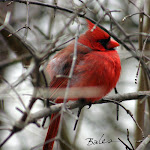
At this time of the year, I think what I most enjoy are the bright red, puffed up male Northern cardinals. Against a background of brown and gray, it's virtually impossible for them go unnoticed. But why be so daring? Most other colorful male birds molt into much duller winter plumage.

Why be so bold, when only the moon, or is the sun, should shine so bright Petruchio?

• 

Monday, December 10, 2012

I'm nobody. Certainly not!


Happy Birthday, Emily, born on this date, 182 years ago.

 You certainly weren't nobody!