Wednesday, November 30, 2011

Natural Histories: osage orange


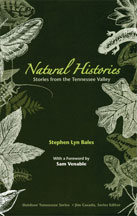
As UT Press writes, Natural Histories "illuminates in surprising ways the complicated and often vexed relationships between humans and their neighbors in the natural world."

Perhaps the most vexing encounter in the book between humans and the natural world occurred when the boys in gray engaged a simple hedge planted due west of the Harpeth River n Middle Tennessee.


On November 30, 1864—147 years ago today—the horrific Battle of Franklin was fought south of Nashville. An osage orange hedge row played a key role in the outcome stopping one division of the advancing Southern army "dead" in their tracks. When the smoke cleared, the Confederate Army of Tennessee had lost almost 7,000 men in just five hours. (The Union army's dead and wounded numbered significantly less: only 2,326.) Here's a snippet from my book:


"The almost forgotten Battle of Franklin was a death knell. “This is where the Old South died,” says activist Robert Hicks, “and we were reborn as a nation.”


I visited the site on this date in 2004. Here's another passage from the book:

"Leaving Lewisburg Pike, I walked along the rain soaked streets and soon found the two aged osage orange trees still growing in the vicinity of the railroad line. Historian Cartwright had told me about the old trees just an hour before. Both were perhaps descendants of the hedgerow that stopped Loring and, as such, were living monuments. It was a circuitous chain of events that moved osage orange from its native Red River home to this historic point of all out chaos; turn back the clock and replay the era, day by day, and it would not have unfolded in exactly the same way. I paused just long enough to admire the towering presence of the elderly trees; and as the rain began to fall heavy once again, I zipped up my coat, turned and walked away."

Excerpts from my book Natural Histories published by the University of Tennessee Press.


The fruit of an osage orange looks like a green brain
and probably tastes like one too,
although, I must admit, I've sampled neither.

Monday, November 28, 2011

drop of rain


Sometimes it’s funny how nature presents itself; it's often serendipitous as we stumble into insight at the most opportune moment.

Recently, I heard the soft warbler of a bluebird, but try as I might, I could not find it. I looked but the source of the call seemed to come from no place specific. It just floated on the breeze.

I'm not the first to be so puzzled. Within the hour I read a passage in 19th century naturalist John Burroughs' first book “Wake-Robin,” originally published in 1871.

“The [blue]bird at first seems a mere wandering voice in the air: one hears its call or carol...but is uncertain of its source or direction; it falls like a drop of rain when no cloud is visible; one looks and listens, but to no purpose."

Saturday, November 26, 2011

a towhee by any other name?


Eastern towhee (Pipilo erythrophthalmus)
A towhee by any other name would...the eastern towhee is a large New World sparrow. Yes, sparrow. It doesn't look like one but it certainly acts the part. Hides in the bushes, feeds on the ground, etc. etc. They are more closely related to Old World buntings than Old World sparrows but that is a can or worms, so we'll just talk about towhees. 

If you have an older field guide, this bird was once called the rufous-sided towhee but several years ago it was split from the more western population and what emerged was two species: the eastern (Pipilo erythrophthalmus) and the spotted towhee (Pipilo maculatus). Apparently, they knew the difference all along, it just took us awhile to catch up.


Wayne's photo is of the male eastern, the female is brown in the places that he is black. But, they already know that. I wonder if they know the difference between the New World sparrows and Old World sparrows. Or does it even matter?

N'est-ce pas?


- Photo by Wayne Mallinger

Thursday, November 24, 2011

thankful for pumkin'


Pumpkins have always been a part of our Thanksgiving holiday. The first festival in 1621 brought together the Pilgrims and the Wampanoag, the Indian tribe who helped the Plymouth Colonists adapt to their harsh new land. The first feast was composed of fish, duck, geese, wild turkey, venison, cornbread with nuts, succotash—an Algonquian dish of shelled beans and green corn—and for dessert, pumpkin stewed in maple sap. 

This last item interested me. 

What would such a dish taste like? To find out, a few years ago, I bought a locally grown "cooking" pumpkin from a produce vendor. Since maple sap is a little hard to come by at this time of the year, I next purchased a jug of pure, organically grown maple syrup from the local Food Co-Op. To make sap, I diluted the syrup with water which is what producers of maple syrup do, except in reverse.
    

To be authentic, I built a fire in the fireplace and stewed chunks of pumpkin in the maple sap. After about a hour and half the dish was done. The pumpkin dessert had the look and consistency of spiced apples but its color was more orange. It was surprisingly good although somewhat smoky tasting.
    

Now, I wonder what kind of nuts the Pilgrims put in their holiday cornbread.

Happy Thanksgiving.

- Photo by Wayne Mallinger. Thanks.


Tuesday, November 22, 2011

brown-headed anomaly


Pines at Louisville Point Park


You look for the anomalies. The things out of place. 


Life's little mysteries. 


Brown-headed nuthatches are not supposed to be in my part of the world. Check the range maps, most of the Southeast but not Tennessee. Not here, the pine forests to the south. They feed on pine nuts, the edible seeds from the genus Pinus. (Genus Pinus. You can write for a lifetime and never use that phrase more than thrice; I've already used it twice in this one post.) 

The first time I saw the active brown-noggin pixies was in South Carolina north of Charleston. Yet, not far from my house as the crow flies, or even walks if it has a mind to, there's a small peninsula—Louisville Point Park—surrounded by Lake Loudoun that has a cluster of pines not that much larger than Uncle Buck's cornfield where you can routinely find the petite nuthatches. Why do they like it, who knows? They are certainly not talking. "No comment," they squeak. 

Cayenne and I found them there on Sunday. Go figure. 

Better yet, go see 'em. 


Nuthatch food
Brown-headed Nuthatch. Photo by Ken Thomas

Sunday, November 20, 2011

stabilimenta?


I lucked out last week when I took this photo of an orb web; the individual strands of silk illuminated by the early morning sunlight. Normally an orb web is practically invisible. That’s why they are such effective traps.

But there’s one group of orb weavers—the writing spiders—that decorate their creations with highly visible patterns. These conspicuous silk structures are called “stabilimenta” or singular: stabilimentum, a great word to drop into any casual conversation.

Why go to so much trouble making a normally invisible web visible?

Why indeed?

Theories vary. And the weavers themselves are mute on the topic. Writing spiders like the ones in the genus Argiope tend to be brightly colored and they often position themselves in the center of the web. The stabilimenta may help camouflage the orb-weaver or make them look larger. The patterns also reflect UV light, which may serve as a lure to possible prey. Plus, the pattern may help keep birds from flying through the web, tearing it down.


Friday, November 18, 2011

lone leaf


Cold. Cold. Wet and rainy. Dreary. Midnight deary. While I pondered weak and weary. The last of the autumn leaves are still clinging to the trees as the first taste of winter has come gently rapping at my chamber door.

And I’m not ready to let go of fall, but when am I ever? Breakin' up is hard to do, but you have to let go of one to welcome the joys of another. You move on, that is life on planet Earth. You simply move on, even when it hurts.

One of the most emotive parts of Stephen Altschuler’s book, Sacred Paths and Muddy Places, comes late.

“Millions of leaves had been falling, but never had I isolated in my awareness any one leaf’s leaving the twig to which it had clung. The importance of this sighting had to do with missing another of nature’s most significant events: the moment of the death of a leaf,” he writes.

“So the watching began, and it lasted a long time, focusing intently on one particular leaf, not knowing how long the release would take. An hour went by, then a second hour—a trance-like hour concentrating on that leaf. At times the distinction between leaf and self blurred. Scary stuff, losing boundaries, but the seeing provided the anchor to reality.”

“Finally, without fanfare, the leaf fell, swirling to the ground. I rose slowly, never losing sight of it, and picked it up: a maple leaf, crinkled and brown, drained of life, dead, but somehow a part of the part of me that sees—the part that understands what it sees not in words but in feelings. That part remained alive regardless of circumstance, for in nature, its death would lead to life.”

Wednesday, November 16, 2011

fading colors


Skewered like a loggerhead shrike's grasshopper, this sweet gum leaf is impaled on a rose's thorn.

The sweet gums are some of the few trees that are still hanging onto a few of their leaves, their colors. But that will soon change.

After Thomas Jefferson made the Louisiana Purchase that, in effect, doubled the size of the United States, the new territory had to be surveyed. All of the territory east of the Mississippi River had been plotted and four meridians established. Surveyors Prospect K. Robbins and Joseph C. Brown were sent to establish the Fifth Meridian. 

At a site located in a black water swamp that was ninety-one degrees, three minutes and forty-two seconds West of Greenwich at a latitude of thirty-four degrees they established a starting point. This spot originally marked by two sweet gums is the beginning for all lands in Arkansas, Louisiana, Missouri, Oklahoma, the Dakotas, Nebraska, and most of Kansas, Colorado, Montana and Minnesota.

Today the location is marked by a rock in Louisiana Purchase State Park near Blackton, Arkansas.

- Photo at Ijams Nature Center.


Monday, November 14, 2011

7 wonders


The on-line msnbc website has just posted a new 7 Wonders of Nature as voted on by millions of people from around the world. And surprise, surprise. I've never been to any of them, so I have a lot to look forward to in the next 30 years.


My bags are packed!


For the list go to: New7Wonders.


Saturday, November 12, 2011

bear jam?

Cades Cove in the Smokies


Growing up in the Great Smoky Mountains, I'm somewhat accustomed to bear jams—traffic moving as slowly as preserved fruit because someone up ahead has seen a black bear ambling near the road. 

Last month my Mom and I were driving the one-way scenic loop around Cades Cove when the traffic came to a stop, we then proceeded inches at a time for the next hour. Inches. Bicyclists passed us on the right; a park ranger passed us on foot on the left. Still the traffic snail-paced along. 

Ultimately, we reached the front of the line, and discovered what was causing the slow down: not a bear ambling by the road but three bears up an oak eating green acorns. 

The ranger would not allow me to stop but I did manage to shoot one frame over my left shoulder.

It did occur to me that this was not a typical bear jam, it was much slower, thus prompting me to come up with a new set of nomenclature to describe the "sluggishness" of the traffic as it slows to look at a Smoky Mountain black bear.

     No bear.....................35+ mph
     Bear Beer..................35 mph
     Bear Dark Ale.............25 mph
     Bear Custard..............15 mph
     Bear Jelly....................5 mph
     Bear Jam....................3 mph
     Bear Cheesecake......300 feet per hour
     Bear Pâté................100 feet per hour
     Bear Fruitcake...........50 feet per hour
     Bear Aged Cheddar......Dead Stop


Friday, November 11, 2011

salute


I would be remiss this Veterans Day not to salute the serviceman nearest and dearest to my own heart: my late father Russell Bales, part of what journalist Tom Brokaw calls "The Greatest Generation." And who would argue with him?

Near the end of World War II, Dad served in the U.S. Navy in the Pacific on the USS Yuma, an ocean-going tug.

The Yuma went to sea to tow damaged ships to port that could not return under their own power.

Dad was 16-years-old when this photo was taken; too young for service, too young to be so far from home, too young for battle. But wars are fought by young men and boys. 

And for that, we salute all vets on this holiday that commemorates your courage and sacrifice.


Tuesday, November 8, 2011

the charm of hummers


I spoke to Sandra Mouron from Greenback at the height of the hummingbird migration. Now that things have settled down, and the hummers are more or less gone for another year, Sandra had time to mail me a photo. 


It shows the side of her house that had six feeders and, to my count, a charm of 21 ruby-throated hummingbirds. The opposite side of her house had four feeders and roughly the same amount of the feathered pixies. 


The books say that for every one you see (or photograph) there are probably three waiting just out of sight. At the height of migration Sandra was using two gallons of sugar-water every day.


That's two gallons! Yes. It was a good year for hummers. 


• 
Sunday, November 6, 2011

at home LeConte


Mt LeConte in the Great Smoky Mountains
The seasons are beginning to mingle. For weeks, fall colors have flowed with slow restraint down the slopes like the tears of a geisha; while last week, a light snow dusted the higher elevations. The first kiss of winter, as soft as a lover's touch, covered Mt. LeConte above Gatlinburg, my hometown.
 
Thomas Wolfe wrote "you can't go home again." He meant that things change. After you leave, it's never the same. Yet, perhaps he was wrong, Asheville is on the other side of the mountains; here Mt. LeConte still looms.

I grew up in the foothills south of downtown Gatlinburg as did my father Russell, as did his father Homer, as did his father Jim, as did his father Caleb. I come from a long line of hillbillies, mountain men, and the mountain that has loomed over all those lives is Mt. LeConte. 

Its silhouette is recognizable as the mountain with four peaks. At 6,593 feet, High Top, the second peak from the left, is the third highest point in the Smokies, topped only by Clingman's Dome at 6,643 and Mt. Guyot at 6,621. 

Chet Raymo writes in The Path, "If we don't belong somewhere, we belong nowhere. If we are not attached to a particular landscape, we might as well be adrift in space...The place we learn to love can be a windowsill in a New York high-rise, a patch of woods on Walden Pond, or a million acres of the high Sierras. What's important is that we feel at home.

I feel at home at the base of this old mountain.


Friday, November 4, 2011

golden drive


To every thing there is a season, 
and a time to every purpose under the heaven:

A time to be born, and a time to die; 
a time to plant, and a time to pluck up that which is planted;

A time to kill, and a time to heal; 
a time to break down, and a time to build up;

A time to weep, and a time to laugh; 
a time to mourn, and a time to dance;

A time to cast away stones, 
and a time to gather stones together; 
a time to embrace, and a time to refrain from embracing;

A time to get, and a time to lose; 
a time to keep, and a time to cast away;

A time to rend, and a time to sew; 
a time to keep silence, and a time to speak;

A time to love, and a time to hate; 
a time of war, and a time of peace.


And every year, there's a perfectly golden time 
to drive through the Great Smokies.

Ecclesiastes 3:1-8 with addendum


Wednesday, November 2, 2011

sapsucker? yes


Yellow-bellied sapsucker


And speaking of woodpeckers:

Tiffiny Hamlin emails,"We were photographing a new family of blue birds at our bird bath when I saw something move in the magnolia tree about three feet from our back door. When I turned to look this is what I saw. 


"I tried to reset my camera settings and get a picture of it but once we saw each other he only stuck around long enough for me to get two blurry shots. There have always woodpecker holes in the this tree but I have never actually seen a woodpecker in it! I think, based on the pattern of the holes, that they were made by a yellow-bellied sapsucker. Is that was this is? If so, is it odd for it to be so close to the house...and people? I always thought they were rather skittish birds."


Yep. That's a sapsucker. Rather scruffy, almost dirty looking—like Charlie Brown's friend Pigpen—although this one is probably a first year female just molting into her more snappy adult plumage she'll be sporting next spring. It's the vertical white stripe down the folded wing and overall yellowish tint that I look for. Tiffiny even managed to get a photo with a few sapsucker wells in it. 


Yellow-bellied sapsuckers are the only woodpecker in our area solely in winter and the only one interested in living trees. They are also fairly common, even near our homes, and, to my mind, less skittish than hairy woodpeckers. They also revisit their active wells, keeping them open a oozing sap. 

Thanks, Tiffiny.